A $2,000 Storm Bill Is the Liquidity Test Most Canadians Are Failing
A sound financial plan should absorb a $2,000 surprise without touching high-interest debt or pausing an essential bill. If an unexpected tree removal or generator repair tomorrow would land on a credit card, the household has a liquidity problem, not a net-worth problem. The difference shows up in ordinary monthly cash flow, and it shows up fast.
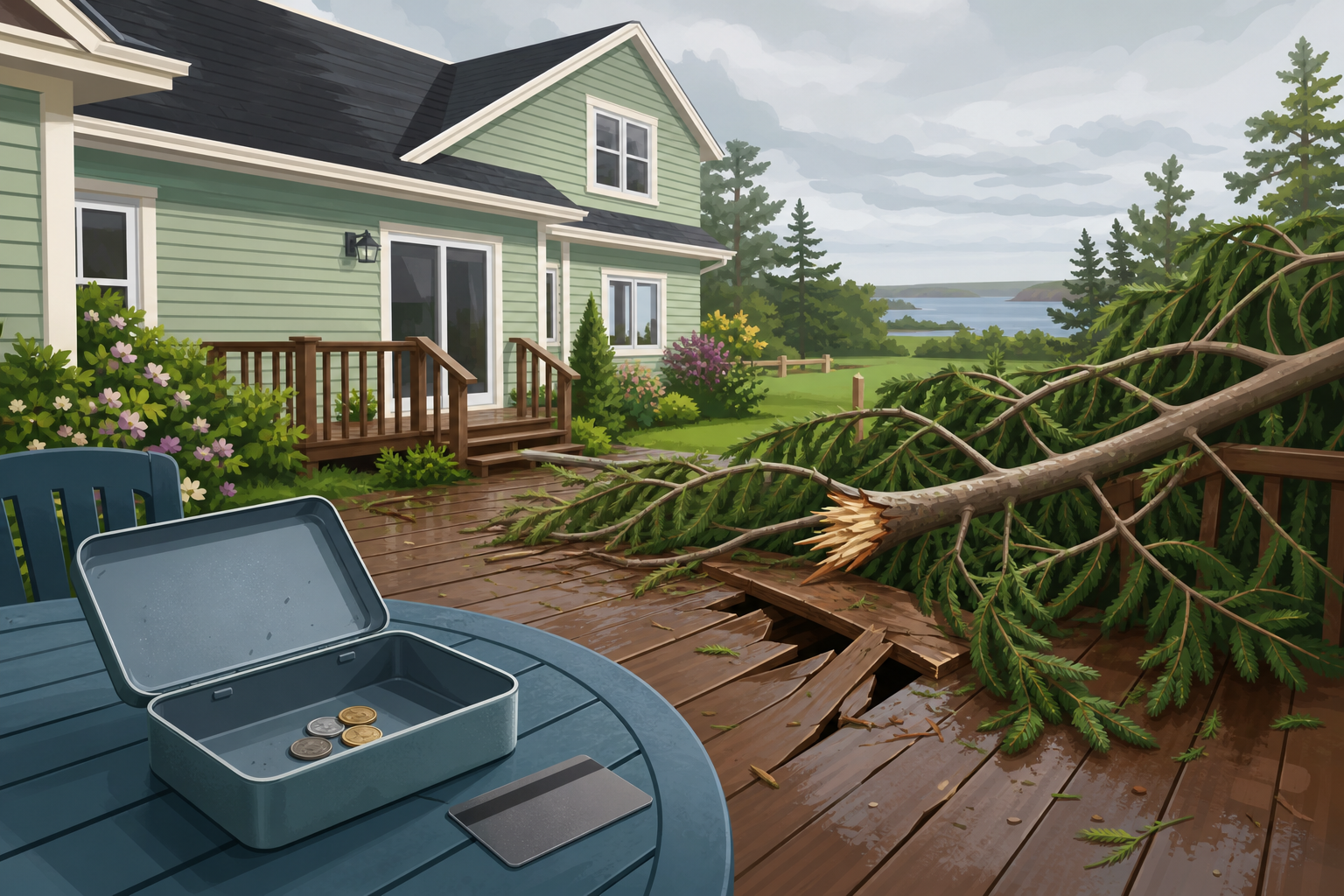
The tree comes down across the back deck overnight. By morning there's a quote for $2,000, and it lands in the same week as the mortgage payment, the grocery run and a heating oil bill that climbs every November. Nothing about the household's finances changed while everyone slept, except that it now has to find $2,000 it never planned to spend. Put it on a card charging around 20% and the repair becomes a new monthly payment that competes with groceries and oil deliveries for months afterward, and if only the minimum goes in each month, the balance outlives the memory of the storm by a long way.
If you've ever looked at your mortgage payment, grocery bill and heating costs and wondered where an unexpected repair would fit, you know the feeling. You own a valuable home and still feel exposed. That instinct is right. Financial resilience is measured in money you can reach on the day a bill arrives. The wealth on your net-worth statement comes second.
A recent survey found that more than a third of Canadians would take on debt to cover an unexpected $2,000 weather expense. On the Island, nobody needs convincing that such expenses happen. Post-tropical storm Fiona in September 2022 brought torn roofs, downed trees and long power outages from Charlottetown to the rural ends of the province. Many of the costs that followed were small, immediate and paid out of pocket: spoiled food, a generator, tarps, a crew to clear the yard.
A national figure is a warning. Your own numbers are the diagnosis. Whether you belong to that third matters less than a plainer question: where would your $2,000 come from this week, and what would using it disrupt?
Why home equity and insurance may not pay this week's storm bill
Plenty of Island homeowners have watched their equity grow substantially. That equity is real wealth, and it sits in the walls and the land. Reaching it means a lender, an application and terms set by your income and credit at that moment. A regional storm can cut work hours or close workplaces in the same week the roofer wants paying.
Insurance protects you against large losses, and it's worth every conversation you have about it. It also runs on its own rules. Coverage for overland flooding or sewer backup often requires a specific endorsement, deductibles apply, and a contractor may want a deposit before any claim is settled. If the deductible itself would strain you, moderate damage ends up on your shoulders either way. Equity and insurance both matter. They simply work on a slower clock than the bill.
How to test whether your plan survives a $2,000 surprise
Run the test on paper before you need it:
Name the dollars. Point to the account that would pay $2,000 without borrowing or skipping an essential bill. A healthy chequing balance that's really next month's mortgage doesn't count.
Call your insurer. Ask what weather events you're covered for, what's excluded, what your deductibles are and how claim payments are made. Being insured rarely means you'll need no cash at all.
Count savings and credit separately. An unused line of credit can bridge a gap, but it creates a repayment obligation and stays subject to the lender's terms. Savings carry neither.
Put the storm into the review. Whether you're renewing a mortgage, planning retirement or paying down debt faster, ask how the plan copes with an unscheduled bill alongside the scheduled ones.
Bring the same test to your next meeting with your mortgage broker or financial advisor. You can pass the stress test, qualifying at the higher of your contract rate plus 2% or 5.25%, show strong equity and hold a sound long-term investment plan, and still be one wet basement away from a 20% balance on a card. Ask for accessible cash to get its own line on your plan, next to debt reduction and long-term returns. If nobody else brings it up, you should.
A sound plan should carry a household through an ordinary-sized shock, and $2,000 is ordinary. Tonight, before any wind picks up, find the exact dollars that would pay that bill today. If you can name them, you're ready. If you can't, you now know the first thing to fix.




A sound financial plan should absorb a $2,000 surprise without touching high-interest debt or pausing an essential bill. If an unexpected tree removal or generator repair tomorrow would land on a credit card, the household has a liquidity problem, not a net-worth problem. The difference shows up in ordinary monthly cash flow, and it shows up fast.
The tree comes down across the back deck overnight. By morning there's a quote for $2,000, and it lands in the same week as the mortgage payment, the grocery run and a heating oil bill that climbs every November. Nothing about the household's finances changed while everyone slept, except that it now has to find $2,000 it never planned to spend. Put it on a card charging around 20% and the repair becomes a new monthly payment that competes with groceries and oil deliveries for months afterward, and if only the minimum goes in each month, the balance outlives the memory of the storm by a long way.
If you've ever looked at your mortgage payment, grocery bill and heating costs and wondered where an unexpected repair would fit, you know the feeling. You own a valuable home and still feel exposed. That instinct is right. Financial resilience is measured in money you can reach on the day a bill arrives. The wealth on your net-worth statement comes second.
A recent survey found that more than a third of Canadians would take on debt to cover an unexpected $2,000 weather expense. On the Island, nobody needs convincing that such expenses happen. Post-tropical storm Fiona in September 2022 brought torn roofs, downed trees and long power outages from Charlottetown to the rural ends of the province. Many of the costs that followed were small, immediate and paid out of pocket: spoiled food, a generator, tarps, a crew to clear the yard.
A national figure is a warning. Your own numbers are the diagnosis. Whether you belong to that third matters less than a plainer question: where would your $2,000 come from this week, and what would using it disrupt?
Why home equity and insurance may not pay this week's storm bill
Plenty of Island homeowners have watched their equity grow substantially. That equity is real wealth, and it sits in the walls and the land. Reaching it means a lender, an application and terms set by your income and credit at that moment. A regional storm can cut work hours or close workplaces in the same week the roofer wants paying.
Insurance protects you against large losses, and it's worth every conversation you have about it. It also runs on its own rules. Coverage for overland flooding or sewer backup often requires a specific endorsement, deductibles apply, and a contractor may want a deposit before any claim is settled. If the deductible itself would strain you, moderate damage ends up on your shoulders either way. Equity and insurance both matter. They simply work on a slower clock than the bill.
How to test whether your plan survives a $2,000 surprise
Run the test on paper before you need it:
Bring the same test to your next meeting with your mortgage broker or financial advisor. You can pass the stress test, qualifying at the higher of your contract rate plus 2% or 5.25%, show strong equity and hold a sound long-term investment plan, and still be one wet basement away from a 20% balance on a card. Ask for accessible cash to get its own line on your plan, next to debt reduction and long-term returns. If nobody else brings it up, you should.
A sound plan should carry a household through an ordinary-sized shock, and $2,000 is ordinary. Tonight, before any wind picks up, find the exact dollars that would pay that bill today. If you can name them, you're ready. If you can't, you now know the first thing to fix.
Read Next
Lump-Sum Inheritance or a Testamentary Trust? Here's Who Each One Is For
Capital Gains Are the Wrong Scoreboard When Your Income Can Vanish
Your Paid-Off House Can't Pay the Grocery Bill in Retirement
If Your Slow Months Need a Credit Card, Your Good Months Aren't Good Enough